I’ve spent over 25 years watching companies bet everything on who they hire.
Then AI changed the bet.

I’m Scott Kosch. I’ve been an entrepreneur, angel investor, and advisor to venture capital and private equity firms — which is both the source of my credibility and the reason I wrote this book. Because the career advice I’d have given five years ago? Some of it is already wrong. And the students still getting that outdated advice don’t know it yet.
why i wrote this book
Every wave of technological disruption sorts people into two groups: the indispensable and the expendable. I've watched it happen up close for 25 years, and the pattern never changes. The people a company can't afford to lose are the ones who know how to learn, adapt, and create value beyond their job description.
This latest wave is generative AI, and it's moving faster than anything I've seen. The skills that made you valuable for the last two decades — efficiency, consistency, churning through mountains of information — are now things a machine does in seconds, for peanuts, without complaining. As an angel investor in tech startups and an advisor to investment funds and their portfolio companies, I see these changes arrive before they make the news.
The premium has shifted. What pays now is judgment, creativity, knowing how to direct AI instead of competing with it, emotional intelligence, a willingness to experiment, and the ability to actually communicate. None of this is new, exactly. But for a long time you could build a career crunching numbers without an ounce of emotional intelligence, write reports without ever speaking in public, and stay in your lane without touching a single new tool. That era is closing.
Here's the uncomfortable part: students entering the workforce in the next five years are being trained for a world that won't exist by the time they get there.
So, I wrote Indispensable. I wrote it for students because they have the most at stake and the least guidance. I wrote it in plain language because jargon won't help a 14-year-old avoid using AI to harm their development, a 17-year-old choose a college, a 19-year-old pick a major, or a 22-year-old prep for their first interview for an entry-level job. And I wrote it with humor because if a book about your future isn't at least a little fun to read, my own kids would never make it past page three.
My Professional Bio
Scott Kosch sits at an unusual intersection of investing, AI, and education. He co-founded NextAccess, an AI business transformation consultancy, and is Managing Partner at Kosch Capital, where he has invested in more than one hundred early-stage technology companies. With over 25 years of professional experience, he has seen what makes people indispensable inside high-performing companies — and now he is watching AI rewrite the rules in real time. Scott wrote Indispensable for students because they are the ones with the most at stake and the least guidance. He also publishes The AI-Ready Student newletter.
Scott co-authors the Capital Intelligence newsletter on LinkedIn, advising private equity and venture capital investors and their portfolio company CEOs on AI value creation. He serves as Board Chair of the Gould Center for Humanistic Studies, reflecting his belief that the humanities are essential both to become indispensable in the age of AI and to lead a fulfilling life. Scott also a Board member of the Randall Lewis Center for Innovation and Entrepreneurship and the Chapter Chair of the Wharton Private Equity and Venture Capital Alumni Association.
Scott holds an MBA from The Wharton School of the University of Pennsylvania and a BA in Economics and Psychology from Claremont McKenna College. He lives in Austin, Texas, with his wife and wrote Indispensable after watching the advice students — including his two kids in college — were getting about AI and careers falling dangerously behind reality. So, the book was road-tested at home before it made it into print.
about me and my beliefs
My parents, Janene and Philip Kosch, were my first teachers. Mom traded a high school classroom for raising her own class of one. Dad spent his career as a professor, eventually running a veterinary school, but his best lessons were at home. This book exists because they made me curious.
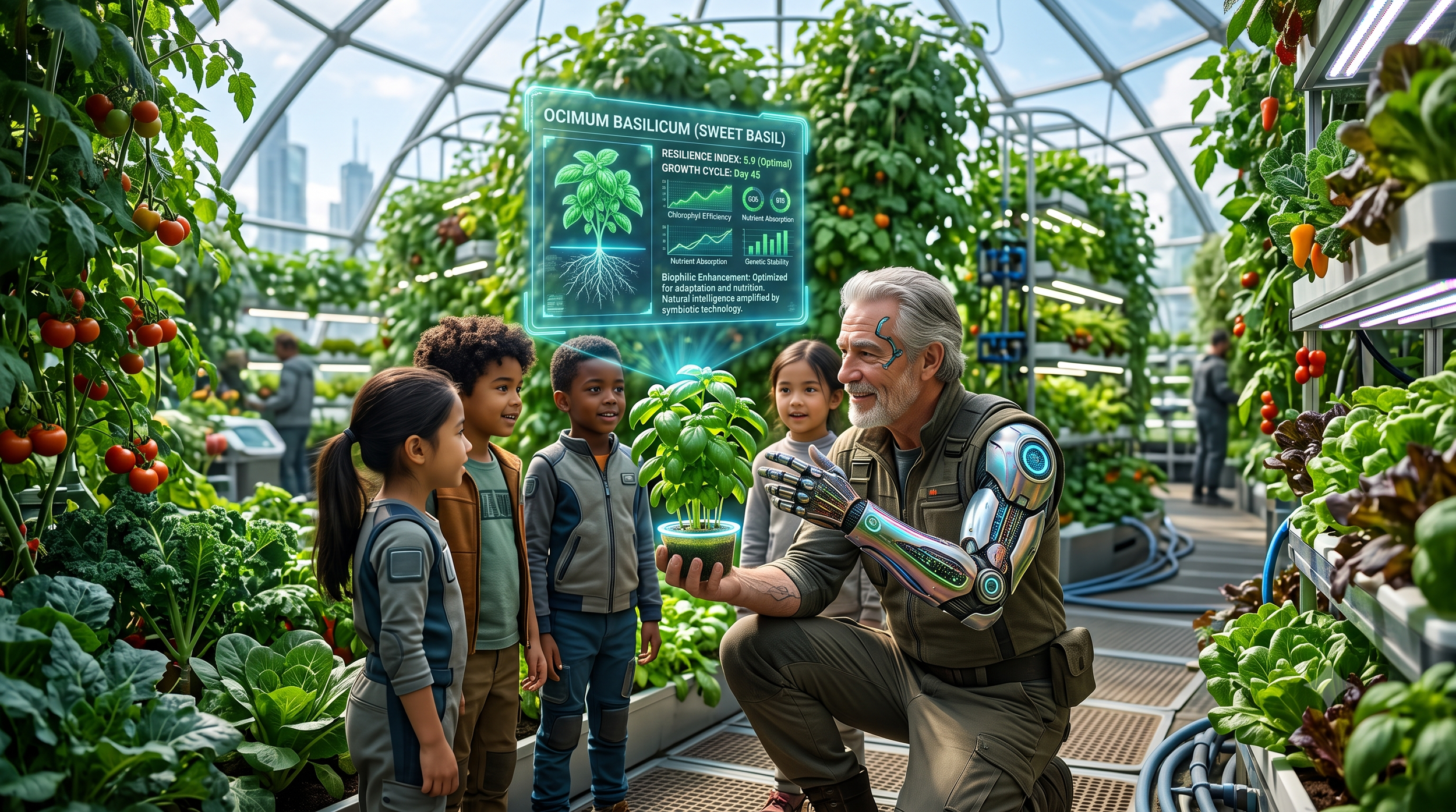
I think of myself as a biophilic transhumanist, which sounds like something a person makes up to sound interesting at parties, but it’s actually the most honest description I have. It means I believe technology should amplify what makes us human — curiosity, connection, creativity, judgment — rather than replace it. And I believe the natural world has more to teach us about resilience and adaptation than any book.
I’m a polymath by disposition, which is a polite way of saying I have ADHD and am interested in too many things to specialize. This turns out to be an advantage in the AI era, where the people who can connect ideas across domains are becoming more valuable. If that sounds like someone you know — maybe the student in your life who can’t pick just one thing — this book will speak to them.